Showing posts with label nature. Show all posts

Friday, September 8, 2017

Monarchs and milkweed


Over the past two years I have learned a lot about raising monarchs in Missouri. When I started out (several years ago now), I put the found caterpillars in jars with a mesh covering (one per jar). But I quickly discovered how problematic that was. First, it was so difficult to clean out the jar and second, other than a stick I would include or the mesh covering, they had no options for where to hang and make their chrysalis. When they'd become a chrysalis on the mesh covering, that was the worst outcome because it was so difficult to take the covering off without damaging it.

So, I began using shoeboxes. I quickly learned that shoeboxes with attached lids were the best (put on their side so they could be tall and the original top becomes a door). I would cut out both sides, leaving enough edge for it to remain stable, and then I'd glue mesh over the giant holes. Last year, I added cardboard pieces to the top and bottom that I could easily remove to cleanout or replace if they got really gross, without having to replace entire boxes. I also began keeping more than one caterpillar in each box. There is a hazard that they will fight and kill eachother if you don't give enough milkweed or you simply put too many in together, but for the most part I've not had a problem doing this.

When I lost several caterpillars a few years ago to the tachnid fly, I began collecting caterpillars in the first instar and eggs. A word of caution: keep your caterpillars separated by size. A big caterpillar will eat an egg or first instar caterpillar. I have not had any trouble keeping caterpillars in the same box as chrysalises.

Now, when it comes to food for the monarch caterpillars (the most important and sometimes most difficult part of raising monarchs), research, trial and error has brought me some knowledge. I thought I'd be set after I bought a swamp milkweed plant (native to Missouri) several years ago. The next year it produced almost 15 shoots, but something happened (overcrowding? pushed out by other plants?) and it didn't come back again after that. Fortunately, it seeded a few other spots in my garden and I had swamp milkweed in another spot that next year. Since then, I have realized a plant really only comes back the next year and after that, it never does again.

I started saving the seeds (put a rubber band or plastic bag around a pod, then collect when it turns brown and is ready to pop open) and tried my not-so-green-thumb to get them to grow. I had kept them in the freezer, and got one of them to sprout. I also purchased seeds from a couple of other companies, but have found that any seeds more than a year old will never sprout. And I've found that keeping them in the refrigerator for longer periods (month+) is better than the freezer for short periods (3+days). When you purchase seeds, you likely won't know if they've been through the necessary winter step, so I put them through that anyway, dry and in the fridge until I'm ready to plant them. I also accidentally discovered this year that even weeks after I've tried to sow the seeds into a pot, when I dug up the soil where those seeds never grew, turning them into the soil got a couple to sprout. (In this picture, there are three varieties - the tall one is swamp milkweed, the thick leaves is common and those little spindly leaves is another variety I don't yet know as the seeds were a mix.)

When growing your milkweed, don't be afraid to cut it back before it gets huge. Make sure you keep some leaves on it, but cutting it back will actually encourage more branches and ultimately more leaves. I will cut off the top (with about 4 levels of leaves) and give the whole cut stem and leaves to the caterpillars, then enclose the rest of the plant to help foster it's ability to regenerate. If you do this late in the season, anticipate not getting any flowers and therefore no seeds.

If you have lots of milkweed, but aren't getting monarchs to flock to your garden, a hint: plant other flowering plants nearby. Last year when I had lantana right next to my milkweed, I got so many monarchs. This year my black-eyed susan's have done the trick. But be careful those other, more aggressive, plants don't choke out your milkweed. And note that once butterflies know your garden is a waystation, you'll see more monarchs in subsequent years. They remember where to find the milkweed.

I'd read that having multiple varieties is important. Well, I've finally gotten there. After over-wintering some tropical milkweed under some grow lamps last winter (of the 10 plants, only one made it... likely they were infected with a black mold that infects milkweed plants that don't die back each winter), I finally will have some tropical milkweed seeds to start for next year. And I finally managed to get some common milkweed and another variety to sprout late this summer.

Swamp milkweed is the preferred food for monarchs. They will eat any variety, but swamp is their favorite (easy to see too, as I find way more eggs on the swamp milkweed than the others). One caterpillar can decimate one swamp milkweed plant. So having others is very important. Finding the eggs is actually really easy once you know what you're looking for. They start out as small white dots then before they hatch, they turn black. Here's an egg on a swamp milkweed leaf, ready to hatch in a day or two:
How can you tell the difference between milkweed varieties? Swamp milkweed has narrow leaves, only gets about 3-4 ft tall, and produces light pink flowers in big clumps in late summer (August in Missouri):
Tropical milkweed (an annual here in Missouri), has leaves and seed pods that look very similar to swamp, but it's flowers are more golden and it flowers a little earlier. It is the most common one I've seen in people's flower beds:

I have yet to see flowers on common milkweed, but the plant itself gets huge - I've seen it 6 feet tall. And the leaves are so much bigger. The seed pods are also bigger and fuzzy. And here in Missouri, it doesn't last the entire monarch season. It's the earliest to bloom and begins to turn brown before the last generation of monarchs (the generation that migrates to Mexico to overwinter) has a chance to eat it. It's the only kind I've seen "in the wild," occasionally in drainage ditches.  Here's common milkweed next to tropical so you can see the difference in leaf size:
When collecting leaves from other sources, I have a couple different methods to keep them semi-fresh: after washing them, wrap in a damp paper towel, enclose in tupperware container and keep in the fridge, or keep them on their stems in a cup of water unrefrigerated. Note if they've already started to wilt, they will not last long no matter what you do. If kept moist, I've managed to keep leaves for a week before giving them to my caterpillars.

Monarchs will also eat butterfly weed, which has shorter, more numerous and darker green spindly leaves and flowers that are very similar to milkweed. However, it is not the monarch's plant of choice so I keep that in my garden as a backup for when they eat all the milkweed. You can tell if a plant is milkweed by picking a leaf. If it "bleeds" a white milky substance, it's milkweed. If not, it might just be butterfly weed.

And, worst case scenario, if you run out of all those options, a fifth-instar caterpillar will eat cucumber. Buy only organic (from your local farmer's market if you can). Note that they will eat any and all fresh milkweed they can find first and that younger caterpillars will not know they shouldn't eat the cucumber. If they are too young, they will die (I lost a couple last year when I switched them over to cucumber).

I try to be strategic and if I know I have too many caterpillars for the amount of milkweed I have at a time (or that I'll completely decimate a plant mid-summer, giving it no chance to come back in time for fall monarchs), I'll give cucumber to fifth instar caterpillars in early summer. You'll want to get multiple varieties if you can find them. I've had caterpillars choose to eat the stems of a common milkweed plant before fresh cucumber (like the kind you'll find in the store, with thin light-ish green skin) and I've had caterpillars abandon a leaf beginning to dry up only to devour a fresh super-dark green cucumber with thick skin.

Orange aphids can be a huge problem on all milkweed. I try to keep that under control by hosing them down and squishing them between my fingers. Ladybugs will eat aphids (and I think ants will too as I've seen them crowding my plants covered in aphids), but they'll also eat caterpillar eggs. Hence, I've begun picking leaves that have eggs on them and bringing them inside. But, be careful if you decide to do this. If the leaf dries out before the caterpillar hatches, it will not hatch. And, remember, big caterpillars will eat the eggs too so I keep them in the box with only first and second instar caterpillars who mostly stay on their own leaves until they get bigger. I also keep some milkweed in an enclosed mesh laundry hamper. My plan was to allow caterpillars to feast on the milkweed until they got into the fifth instar, then transport them to a box, and that has worked a few times before they run out of milkweed.

There are lots of articles that talk about the lifecycle of the monarch so I won't reiterate that here. It was a surprise to me when I learned about the multiple generations of monarchs and their migration pattern, so you might look into that. I believe that this year I distinctly had four different generations of monarchs. Hopefully the caterpillars that are not yet to fourth instar stage are headed to Mexico when they leave me.  Last year was the first time I'd had monarchs from that generation.

Raising monarchs can be a very rewarding experience. My kiddo and his friends at school love watching it too. One of these days I'll get around to building a big monarch "greenhouse" outside with enclosed space for the milkweed to grow and regenerate while caterpillars feast, safe from predators. Won't that be fun!

Friday, July 5, 2013

Kolob Canyons, Zion National Park (or the end of a journey)


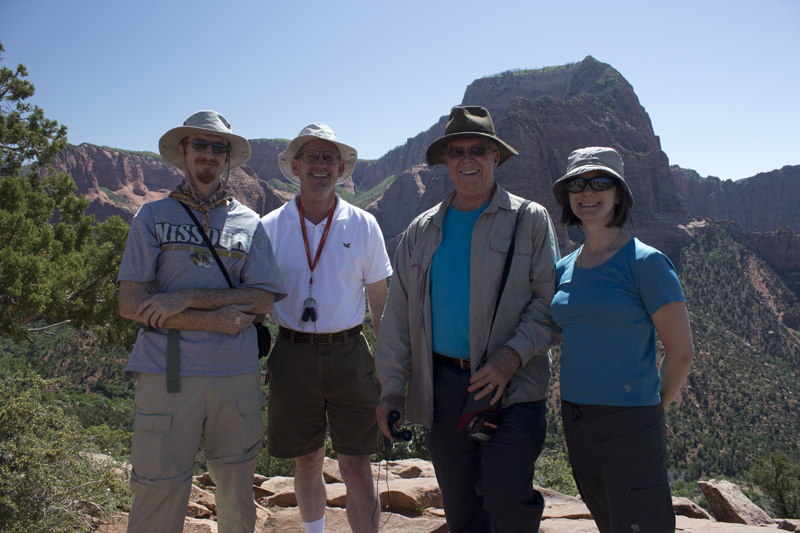
Somehow, I overlooked finishing my posts of photos from last year's summer vacation. Well, here it is... the long-awaited end to the summer journey of 2012 with my father, father-in-law, and husband. We spent our last morning before the long drive home out at Kolob Canyons in Zion National Park. Though this was my third visit to this wonderful park, it was the first time I'd been to this area. It was beautiful and we did a nice 1 mile hike to the Timber Creek Overlook, with 360 degree views at the end.


This concludes a series on our 2012 trip. In case you missed them, here are my previous posts:
All photos copyright Katrina Kouba Boles

Sunday, June 30, 2013

Butterflies & Dragonflies at Big Creek Conservation Area, Missouri

While hiking in Yosemite this summer, I realized how much I was testing the patience of my traveling companions every time I stopped to watch and photograph a butterfly. (On a previous hiking trip my dad made a joke about how I needed to have a bumper sticker on my back that says "I brake for butterflies" because I kept stopping and he kept running into me.) Well, this summer I decided that I should do my best to go out on my own photographing expeditions around the state where I could explore and stop to view butterflies without angering anyone. Yesterday I took that first step.

(click on photos to enlarge)
In Northeast Missouri, I spent about an hour in the Big Creek Conservation Area. I had the place completely to myself - which was not surprising as access was a gravel road and there really isn't much to do out there. My plan was to hike part of the Thousand Hills Trail and to see as many butterflies as I could. Though I'm not sure I ever found the real trail, to my surprise and complete delight, I saw several butterflies and dragonflies within ten feet of entering a dirt road at the end of the Rainbow Basin Trail road. I did not go far - thankfully as a sunny day quickly became a rainy day - but relished in the scent of wildflowers, listening to the wind whistle through the grasses, and enjoyed the peace and serenity of the scene.

I saw several crescent butterflies puddling in the patches of dirt road, and a couple of sulphurs who refused to let me get anywhere close to them. I also saw several species of dragonflies, and though I've not really attempted to get many pictures of these creatures before, I decided they fit the bill this stime. I tried to discover the names for all of the insects I photoed, but had little luck with some. Ones I really wasn't sure of are in parenthesis:
 Pearl Crescent Butterfly
 Pearl Crescent Butterfly
 Pearl Crescent Butterflies
 Pearl Crescent Butterflies
 Sulphur Butterfly
 (plains clubtail?) dragonfly
 (tailed blue?) butterfly
 (widow skimmer?) dragonfly


All photos copyright Katrina Kouba Boles

Wednesday, July 18, 2012

Little Oases on the Route to the Top - Grand Canyon Day 3

So, it's been a while getting back to organizing and just looking at all my vacation photos, but of course it's so wonderful to look back and marvel at how impressive that place is - not that these photos come anywhere near capturing it. For the last two days in the canyon I opted to hike more comfortably, which meant all photos were taken on my phone so that I didn't have to deal with trying to find a way to carry my DSLR comfortably - there is no way, I've decided.

There are two really wonderful things about coming out of the canyon via the Bright Angel Trail over two days: one, the first day is not nearly as steep, and two, the trail often is alongside the creek which provides little oases as relief from the heat and sun. So at the end of the hike, dropping the bulk of our gear at our campsite, we get to make the extra 1.5 mile hike out to Plateau Point for the sunset.
 The guys crossing the creek
 View of battleship rock (I think) from Bright Angel Trail
 From whence we came - Bright Angel Trail etched into the canyon

(Unfortunately the puzzle images I took at Plateau were mostly blurry and the timelapse also didn't work, so the only puzzle I got was with my phone and the colors were all off so I got rid of the color and now I like it.

Next Up: Coming Out of the Canyon On the Last Day

This is a series on our 2012 trip. In case you missed them, here are my previous posts:

All photos copyright Katrina Kouba Boles

Monday, July 2, 2012

The Sky in the Grand Canyon: Phantom Ranch Part 2

We were hot by the time we got back to Phantom, where we went inside to eat our sack lunches, drank some lemonade and enjoyed the fans. By mid-afternoon it was announced that due to the water breaks they would be turning off the electricity, so we went out to enjoy the creek. I had hoped to get down to the beach - I was going to jump in fully clothed killing two birds with one stone - but it was so hot that no one would walk all that way with me. Plus, with the water break washing out the trail to the beach, there was no guarantee we wouldn't have to go all the way around. So, we found our little corner of the creek, soaked our feet, legs, etc.

I washed off my pants and tried to help the newly formed rashes on my lower legs from getting too bad - the red dust must have some microorganisms to which I'm allergic in it and that dust blew right through my pants, settling on my lower legs. Then I removed my shirt and washed that out too. Boy was it cold putting that back on! It's hard to believe that I was shivering for a bit in 110+ degree weather. (Someone said they saw the thermostat hit 122.)
 Bright Angel Creek
 Footbridge crossing Bright Angel Creek
But here's the really incredible part: the clouds seem so much clearer, the sky almost smaller than it is back home, but gorgeous and worthy of better timelapses than my feeble attempts. Trying to get a sense of it? Watch my HD timelapse video on Vimeo:


Now that I've done this twice I can say with absolute certainty: If I do this again, I will only do it if I get a day at the bottom. Relaxation and recovery in addition to actually getting to enjoy being inside of the canyon make for happier hikers on the mandatory climb out of the canyon!
 HDR - Colorado River facing West from the Silver Footbridge
 Surreal HDR image of Bright Angel Creek

Next up: Hiking Bright Angel Trail to Indian Gardens and Sunset at Plateau Point

This is a series on our 2012 trip. In case you missed them, here are my previous posts:
All photos copyright Katrina Kouba Boles

Wednesday, June 27, 2012

Rockin' the Bottom: Phantom Ranch Part 1

sunburst on Battleship rock in "The Box," North Kaibab Trail
The Grand Canyon... what an awesome place! Backpacking it makes you forget all the troubles and worries of the working world, allowing you to dwell in the moment (particularly on your aching legs and sore knees). Fortunately, when you spend a day at the bottom, you get to enjoy a little of it's splendor without the constrains of carrying all your belongings and mentally reminding yourself over and over "you can do it".

So what exactly is it like at the bottom of the canyon? Rightly, I can't honestly describe it and my pictures/video don't do it justice. That does not mean I did not try to capture it as you will soon see, it just means that no camera can put you there... in that immense space that strangely feels so small, with towering peaks deceiving your well-tuned depth perception, particularly when you realize you can't even see the rim from which you came.

With what did we fill our day at the bottom? We had breakfast at Phantom Ranch. Then, leaving most of our belongings at our campsite, we did a morning walk about 1.5 miles through "the box" on the North Kaibab Trail. Compared to the day before, it was a flat hike that followed the Bright Angel Creek. It's recommended that you make your way through the box before mid-day as the towering walls of the canyon are like an oven that gradually heats during the day and is stiflingly hot from afternoon through evening. Headed North it was mostly shady and we turned back when it looked like shade would be hard to find up ahead.
 testing my slow shutter on the Bright Angel Creek
 (Once I figure out how, I will add a button to enable buying prints of these puzzle/collage photos via Fotomoto)

2 photos morphed together and made HDR
 having fun with HDR and layering photos, created in Photoshop

Up Next: The Sky in the Grand Canyon - Phantom Ranch Part 2

This is a series on our 2012 trip. In case you missed them, here are my previous posts:
All photos copyright Katrina Kouba Boles

Thursday, June 14, 2012

Petroglyphs and Painted Desert

What might two dads and their eldest (adult) kids do after driving 1000+ miles to Albuquerque, before finishing their drive to Grand Canyon? Hint: playing in the waterpark at their hotel is not the correct answer. Answer: they decided to take a scenic detour at Petroglyph National Monument near Albuquerque.

Yes! One more stamp in my national parks passport! Supposedly there were like 100 petroglyphs on the Mesa Point Trail in Boca Negra Canyon. I think we probably missed a few. One thing we didn't miss were the views of Albuquerque. On such a beautiful day, it was a great little diversion. It was a short, easy trek up to viewpoints into the canyon on one side and Albuquerque on the other. And, though we didn't have it to ourselves, we only saw a handful of other visitors.

We also veered off the highway a bit at Petrified Forest National Park. But since we spent all our "free time" at Petroglyph NM, we opted not to drive the 26 miles out of our way to see the "forest". We did take a little stroll at the Painted Desert, where it was just as windy as I remember it from last time.


This is the first in a series of posts on my 2012 travels. Up next: Hiking the Grand Canyon

All photos copyright Katrina Kouba Boles

Friday, April 20, 2012

Timelapse Fun

So, I've been working on capturing timelapses when the weather cooperates - it seems either there's not a cloud in the sky, or it's raining. I got some fantastic clouds, but had the timer set too slow so they go by so fast it's sad, and then there were issues with my little tripod not wanting to stay put. Le sigh. Going back through my attempts to date, I think this sunset is probably the best I've shot so far:


Hopefully, I'll get some more good ones in coming days. (I gotta get the hang of this before Grand Canyon, don't ya know.)

Monday, March 26, 2012

Dew on Plants

Sunday morning I was outside looking at my "gardens" (I hesitate to call them that as it's more like weed areas with a few flowers somehow popping up in between), and I noticed how the dew drops on the leaves were doing really awesome things in the light, so I got my camera and attempted to take some photos. For the most part, because I kept the depth of field so shallow, there's only one shot where droplets are truly in focus, but unless you blow the pictures up, you really can't tell. Anyway, here they are:
Columbine Leaves

 Strawberry Leaves:


 Lambsear:


All photos copyright Katrina Kouba Boles